
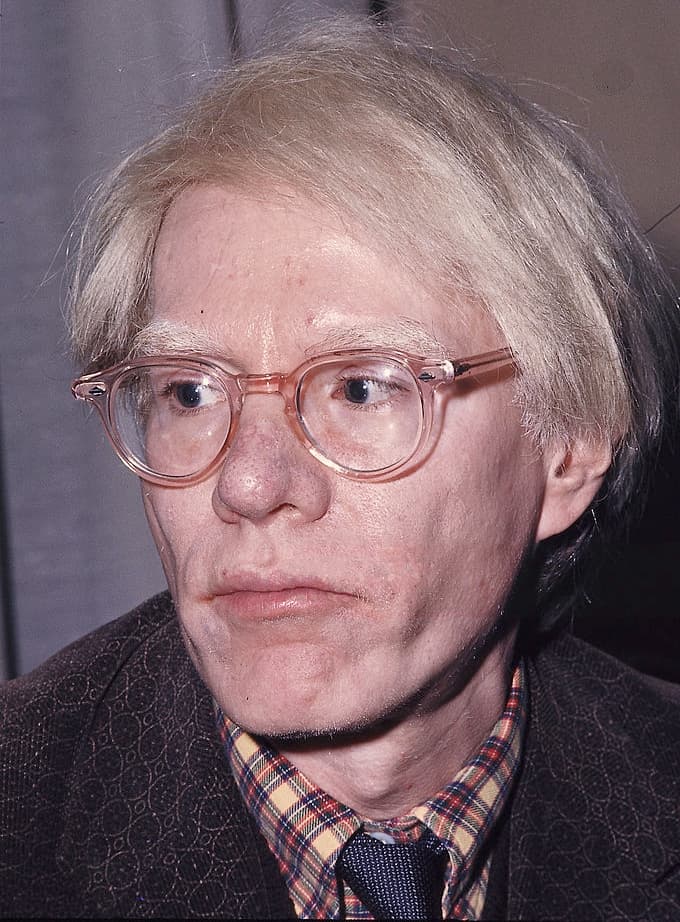
Andy Warhol
Pop Art
Pittsburgh / New York City, USA
Andy Warhol (b. 1928, Pittsburgh, PA; d. 1987, New York City) redefined the visual language of the 20th century, dissolving the boundaries between art, consumer culture, and celebrity. As a central figure of Pop Art, he transformed everyday imagery into iconic compositions that continue to shape contemporary perception.
Working across painting, printmaking, film, and installation, Warhol developed a practice in which repetition and color function as tools of both amplification and detachment. His celebrated series including Campbell’s Soup Cans, Marilyn Monroe, Flowers, and Mao translate mass produced images into meditations on identity, fame, and cultural memory.
Rooted in his background as a commercial illustrator, Warhol embraced silkscreen printing to create works that blur the line between originality and reproduction. His studio, The Factory, became a site of artistic production and cultural exchange, where art intersected with music, film, and nightlife.
Warhol’s work reveals both the allure and the surface of modern life, capturing a world shaped by media and repetition. His legacy endures as a defining reflection on image culture and its lasting impact on how we see.